Our latest NAPPA Award winning books are full of great information and resources for parents.

The Innovative Parent: Raising Connected, Happy, Successful Kids through Art
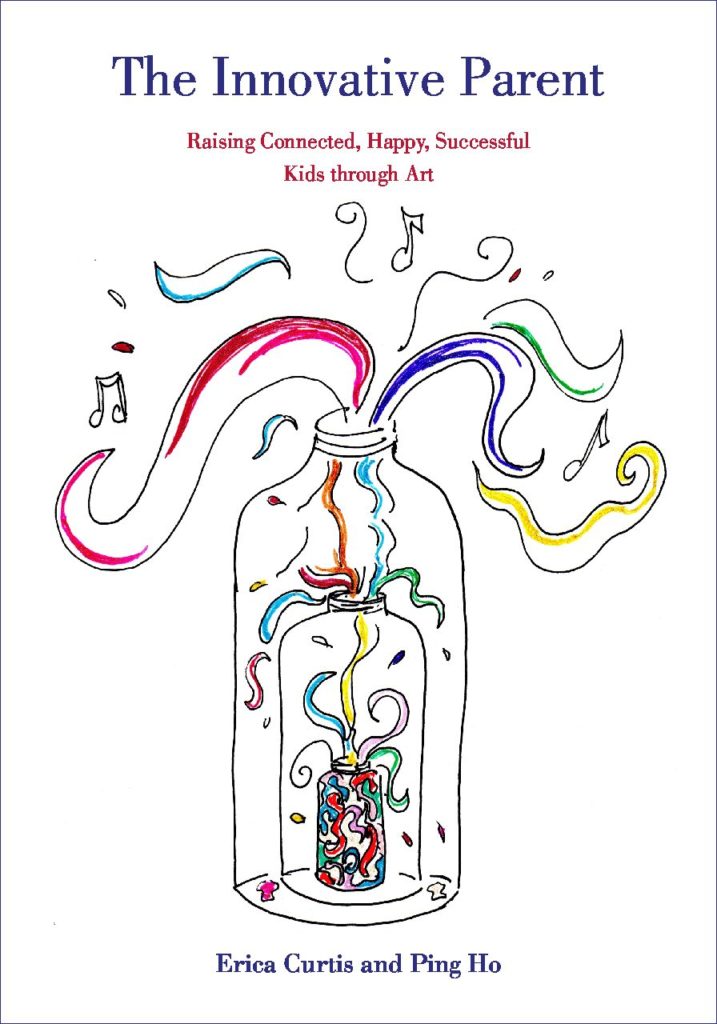
As parents, we all seek to have a deep and authentic connection to our children. Deep inside we know that open communication, based on trust and understanding, is key to creating this type connection, but many of us struggle to maintain open communication. The Innovative Parent: Raising Connected, Happy, Successful Kids through Art provides a wonderful guide to build stronger connections and better communication.

The authors, Erica Curtis and Ping Ho, integrate cutting-edge research, years of clinical expertise, and their own parenting experience into a revolutionary yet practical guide to creative parenting.  Lots of practical anecdotes bring concepts to life and show art in action with kids and parents.

Erica Curtis is a board-certified art therapist, licensed marriage and family therapist with expertise in parenting and relationships. Ping Ho is founder and director of UCLAarts and Healing, which offers training and community education in the use of creative expression for self-discovery, connection and empowerment. $17.56 / $31.96.

Food Fight for Parents of Picky Eaters
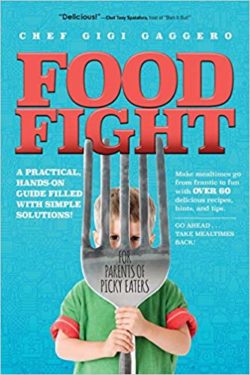
Take mealtimes back with Food Fight for Parents of Picky Eaters.  Chef Gigi exposes the habits that inadvertently reinforce picky eating and helps parents navigate the challenging landscape by showing them the science behind flavor and awakening them to the culinary magic of umami–just like professional chefs have done for years. Included are both simple techniques and more advanced tactics to encourage more adventurous eating, as well as over 60 delicious, easy-to-prepare recipes the whole family will enjoy. $18.95.

For more parenting books and other product reviews, visit nappaawards.com
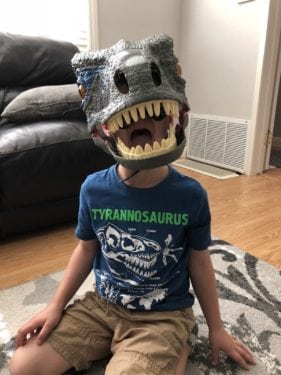
Play is a critical part of child development. It is through play that kids learn about the world around them. It’s important for parents to not only encourage their kids’ growing imaginations, but also to take some time to get back in touch with their own sense of wonder.

This little dinosaur is ready to run Jurassic World with this imaginative toy.

What is imaginative play?

Imaginative play is essentially roleplaying, when kids are re-creating their own experiences or modeling their behavior off something that interests them. If your child only responds in animal sounds for a week, or insists you refer to their chicken nuggets as dinosaur bones – they’re practicing imaginative play. They can gain inspiration from a commercial, a career day at school or from pretty much anything they encounter in their day-to-day life. Children learn from these experiences, and in order to make sense of the world, they need to engage in imaginative play.

Play is generally the way that children under age nine learn, so engaging children in play that inspires their imagination — through pretend play and perspective taking — develops both cognition and creativity in youngsters,” said Dr. Gisele Ragusa, an education specialist and professor at the University of Southern California. 

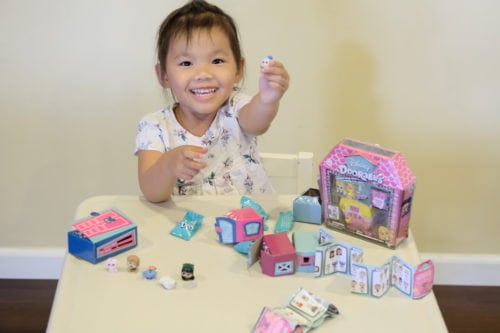
Nurturing imagination can help develop an array of cognitive and social skills, as seen here with the Disney Doorables.

Why is it important?

Although this sort of play seems fairly simple, it’s a critical stepping stone for expanding several developmental skills like language, critical thinking and appropriate social responses. When your child is playing make-believe with their friends, they are passing along, growing on and understanding ideas they might not have otherwise. It’s kind of like your kid’s first business meeting, except with Play-Doh over pencils. In a group imaginative play setting, they’re learning how to work with others and how to communicate what they think in a way that will be received well by their peers. It will also help boost their self esteem when they know they can be anything and everything, just by pretending.

There’s no right or wrong way to play – just let the creative juices flow!

If you listen closely while your kids are engaging in imaginative playtime, you may be shocked to hear words you never thought they’d know. Kids imitate those closest to them, so don’t be surprised if mommy’s or daddy’s favorite phrase turns into Candyglitteropolis’ town slogan. Imaginative play helps your child understand the power of language, and allows them to practice words that can help them describe, organize and reenact play. Developing these kind of language skills will also help them connect experience to written words, and will eventually make learning to read a breeze.

For a variety of playsets, check out our latest winners.

Since the bulk of imaginative play is based in your children’s growing brains, it will blossom their thinking and problem solving skills as well. What happens when two friends both want to be the captain of the spaceship? It forces them to come up with solutions that work for everyone, and these situations help expand their creativity in addition to their critical thinking.

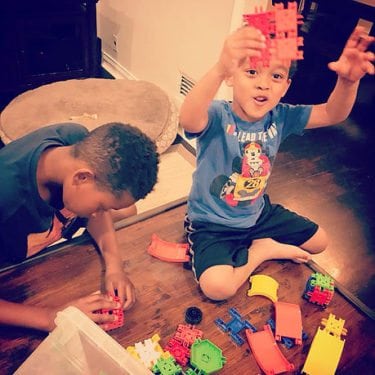
Playing with others helps kids generate and expand on ideas they might not have come up with otherwise.

“Imaginative play enables children to develop independent mindsets and to think beyond the immediacy which is a precursor to abstract thinking; a key feature of higher order thinking,”  says Dr. Ragusa.

How do we encourage it?

To help nurture the imagination, you should provide plenty of props. Toys and playsets are definitely a great tool for fostering creativity.  And so are everyday household items.  It can be as simple as cardboard and old clothes. Have a box of raggedy blankets? Make a fort! Collect postcards? Time for a vacation to Pluto!

The best part of imaginative play is the quality time you can spend with your kids.

The most important thing you can do to encourage imaginative play is to join your little ones. There will always be a good excuse to do something else, but taking the time to pick up a wand and walk into their magical world is the ultimate inspiration. Not only are you helping them develop their creativity, you’re nurturing fantastically influential memories that will bring a smile to both your faces for years to come. We promise your kids won’t care if your lion’s roar sounds silly – they’re just happy you’re there.

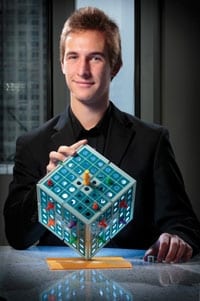
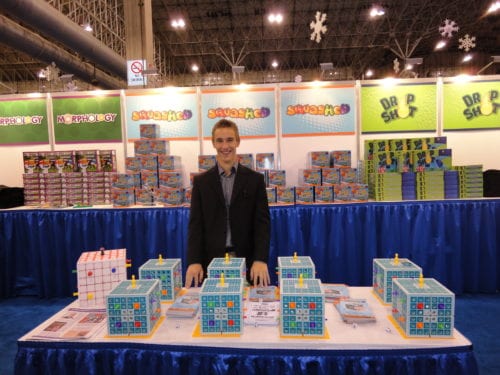
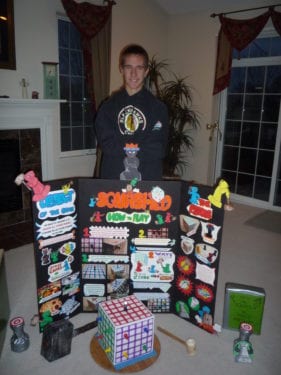
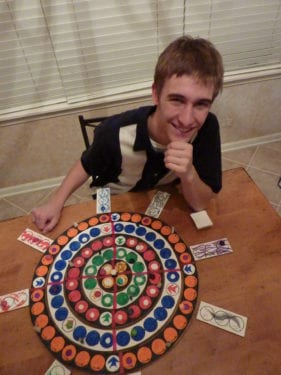
We spoke with Nick Metzler, an L.A.-based toy and game designer who began inventing and tinkering when he was a kid. At just 16-years-old, Nick won first place in the Young Inventor Challenge (Y.I.C.), a unique competition for kids ages 6-18 to showcase their talents and get a chance to have their toy or game manufactured. Nick won again the following year, and his game Squashed was put in stores. With an impressive collection of work under his belt, Nick now works for Spin Master, a leading toy and game producer. Nick is eager to give back to the Y.I.C. community and help other kids realize their creativity and potential.


What interests did you have as a child that led you to inventing?

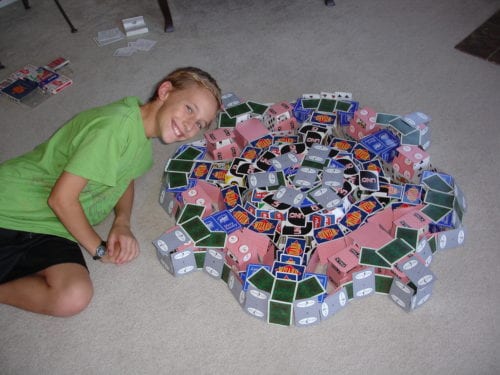
My childhood was naturally creative. When my mom heard I was bored, she’d instruct me to go to the recycling bin, dump it out, and make something with whatever was in the bin. Fake water parks, new shelves for my room, artistic projects, the possibilities were endless! I also loved making ‘contraptions’ which I recently learned were actually named ‘Rube Goldbergs’. I used to take anything and everything from my house and turn it into a contraption- hot wheels, cans, bouncy balls, dominoes, strings, card houses, and more. I loved creating systems that worked with just a little push, it excited me to see those ideas come to life. As a game inventor, now I design environments that can foster emotions that I’d like the players to experience. With just a little push, they can have memorable fun experiences with their friends and family!

What can parents do to encourage their child’s imagination?

Creation happens when you break away from the intended use of objects. It happens when you ask: “Can this food become a space ship?” or “Can I turn this lump of wood and metal into a Survivor challenge?” Creation is a function of combining disparate concepts, things that shouldn’t normally happen. It’s that smashing of random stuff together that makes invention happen. As adults, we call this innovation- taking a previously working gizmo and making it achieve the same goal in a more efficient way, perhaps by borrowing a solution from a completely different discipline. Parents can encourage imagination by challenging their children to solve problems with objects on hand, even though a magic bullet is right beside you. Children have an innate desire to continue tinkering even through failure, because they believe the solution to be possible. It’s only in adulthood that we block that urge with embarrassment of failure and feelings of self-doubt. Break away from the intended use of products, use lipstick as a marker, use packing peanuts as fake snow, use holographic Kleenex boxes as the backgrounds for your self-designed trading card series! Make your life a little more inefficient and it’ll spark creativity. Don’t give your kids the answers. Give them the goal and the rules of the game and they’ll start to create strategies themselves.

How did you transform your passion for inventing into a career?

Turning my passion for inventing into a career sort of happened by accident, and a good chunk of luck. My mom saw an ad in the newspaper for the Chicago Toy and Game Fair (ChiTAG)(the only toy and game fair open to the public in the nation) and told my sister and I that we were going. I wasn’t super psyched about it at the time, but I liked games so I went along not knowing that it was going to shape the next several years of my life. There, I saw the Young Inventor’s Challenge. The Y.I.C. was like a science fair, but for toys and games, and there was only a few entries. I walked around and wasn’t super impressed with the entries…having made 20 of my own games to this point. Within 20 minutes of looking at the competition I told my mom that I was going to win it the year after. One year later I won the senior division with a game called That’s Cheating!, a board game version of B.S. where the best cheater wins. I had an absolute blast with the competition and got a chance to meet the President of the Chicago Toy and Game Fair. She said that the ChiTAG Y.I.C. needed some advertising help, and I agreed to expand the Y.I.C. to several schools in the area. To help, I was put on the news and in magazines, all of which grew the Y.I.C. by 500% in one year to 250 entries. I entered again the year after with a game called Squashed and became the Y.I.C.’s first back-to-back winner. Squashed was licensed the following day by Tim Kimber, CEO of PlaySmart, where Squashed lives today. That really made a splash. That, plus a solid, short career in the industry has resulted in being named the Young Inventor of the Year for the entire industry in 2013, and I’m now a finalist for the Rising Star Innovator of the Year. Please vote if you think I earned it. I’m in the 4th category.

Can you tell us a little bit about any projects you’re looking forward to?

I can’t say much about any projects I’m currently working on, since I’m under NDA (non-disclosure agreement), but in the recent past I’ve consulted as a Survivor challenge designer, a theme park ride designer, an immersive theater gameplay director, and more. I’m currently developing a game show run entirely online, and also just started running a Facebook group called Gaming Life, which is focused on applying game metaphors and game ideas to improving your career and life. I have the unique ability to apply game design to any medium and I intend to use it to transform the world into one that is unbelievably fun for anyone who wants to play in it. There is one game that’s coming out December 1st, 2018 though that I’m particularly excited about- it’s called Good Question and you’ll need an Alexa device to play. Just pick a card from the deck to start. On the card is a single word. Your job is to get Alexa to say that word, without saying the word yourself. You can ask any question you want. It’s quite fun, especially with a group. Here’s a sample–Get Alexa to say the following words: Hour, Pepper, Unicorn, Bolt. There’s tons of words in the game, with more rules to play with, but you can play the basic game right in your home, right now. Don’t forget to ask a Good Question.

What is the Young Inventor Challenge and how can kids get involved?

The Young Inventor’s Challenge is always in October. So this is a great time to think about next year’s competition. You can start researching it this year and compete next year. That strategy worked out well for me. If you’re in L.A. instead of Chicago, never fear- there’s a video submission option. I’m not sure if these options can win (they might be able to), but they’ll definitely get judge feedback. All the judges are members of the industry who all have a desire to give back and mentor the next generation of inventors, so it’s quite a supportive community. Here’s the link to register for the Y.I.C. 

What is the best advice you ever received regarding harnessing your creativity?

The best advice that I’ve ever received to harness my creativity is to take something I like, find something I can make better about it, and try to make it. Use anything at your immediate disposal and improve over time. It’s how I started designing games. I hated how long the moves in chess took. I just wanted a faster game, so I made one called extreme chess. It was a lot more carnage. Every move basically resulted in losing a piece, or if you used the cannon, you could wipe out entire columns in one shot. I tinkered a bunch with classic games to make my own. Back when I was young, making a game ‘better’ just meant making it more of what I wanted. As I grew older and realized my sister hated playing strategy games with me, I made those same games better by adding a bit of luck, even though I personally didn’t like the addition. It was better because it was more fun for everyone else around me.

If you could tell your 8-year-old self one thing, what would it be?

The future of cryptology is in computers, not ciphers. Also, you’re going to love meat in the future. Crazy concept I know. And burritos. When you hit college you won’t even be able to count the foods you like on 2 hands. Also, a slice of pizza every day for a full summer is a bad idea.


Don’t Miss Out On The Fun

Sign up for our ENews and be the first to know the latest on toys & family must-haves, giveaways & gift and play ideas!

No Thanks Let's Connect

Family must-haves, articles & giveaways