Check out our article published in L.A. Parent highlighting the Toy Trends for 2019. Click below to read full article.
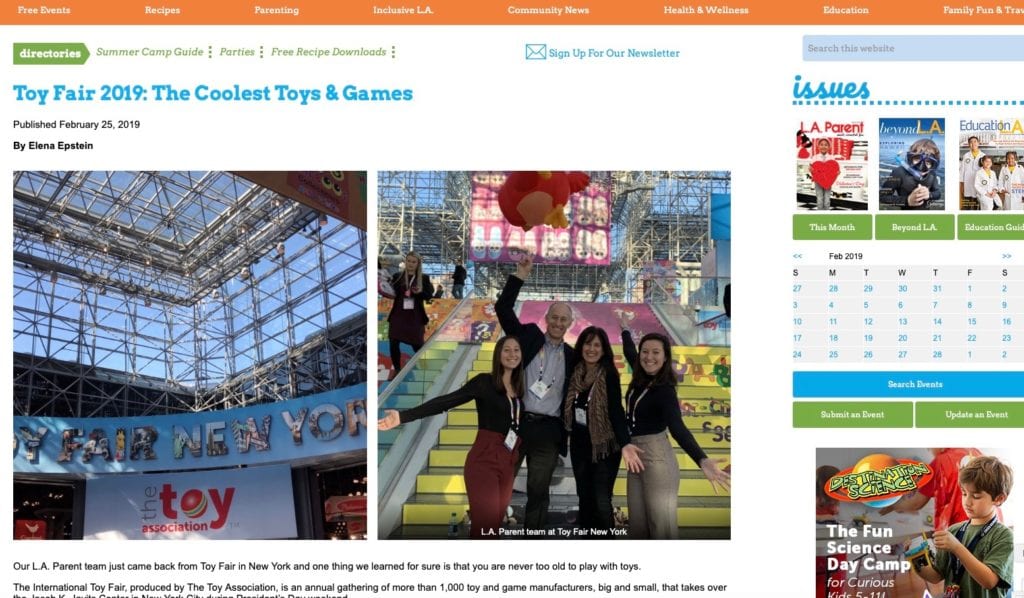

We had a blast covering Toy Fair New York. We saw so many fun products including carpool karaoke, a booty shakin llama, super heroes in all shapes and sizes, a new Harry Potter Sorting Hat, the latest surprise toys, giant outdoor bubble makers, dolls and doll houses, great games for the whole family and so much more!
We’ll continue to bring you the best throughout the year.
#PlayLearnConnect #tfny
As parents, we love when fun and learning come together. That’s why we’re so excited for these latest NAPPA Award winners.
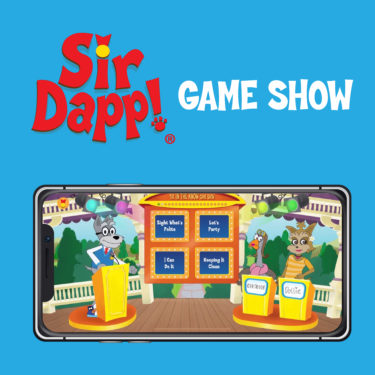
Fun and etiquette come together with an animated silver-haired Schnauzer in the Sir Dapp! Game Show app. Children select from categories like “Sight What’s Polite,” “Historically Rude,” and “Trivia Soup,” with the main canine character, Sir Dapp, guiding them to complete fun raps, decide “who did it?,” figure out what is polite or rude and more. Occasional commercial “breaks,” PSA’s, and music videos with teaching messages further the game show theme. $3.99, ages 5-7.
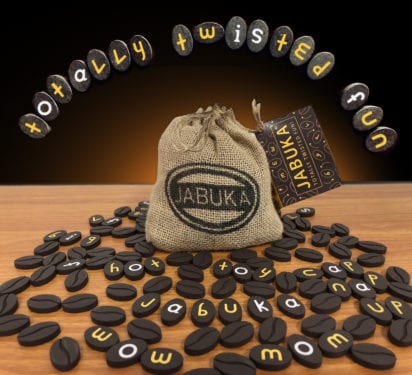
Ready for a fun brain challenge? Jabuka will have you quickly twisting letters and transforming words in this clever and fast-paced word game. The playing pieces are shaped like coffee beans and packaged in a mini jute sack — perfect for on-the-go fun, especially when traveling. $20, ages 8+.

The Let’s Read app gives parents, teachers, grandparents and other special friends and family an opportunity to record their voices reading children’s stories. It’s fun and easy to use on your phone or tablet. The app synchronizes your video/audio recordings with the app’s illustrations and text from an award-winning collection of picture books. Families can then share their own personalized, read-aloud stories on a private, secure family network. Free, ages 4+
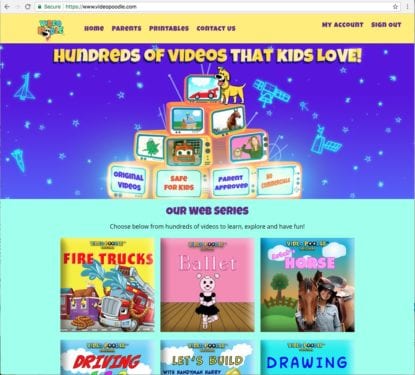
Videopoodle.com is a wholesome, fun and informational video website made just for kids. It is a positive and trusted environment, free of advertising and unsafe links, where children can safely watch responsibly made videos designed to engage, inspire and grow young minds. All of Video Poodle’s series, videos and content are written, designed and produced in-house. $10/yearly subscription, ages 2-6.
We spoke with Nick Metzler, an L.A.-based toy and game designer who began inventing and tinkering when he was a kid. At just 16-years-old, Nick won first place in the Young Inventor Challenge (Y.I.C.), a unique competition for kids ages 6-18 to showcase their talents and get a chance to have their toy or game manufactured. Nick won again the following year, and his game Squashed was put in stores. With an impressive collection of work under his belt, Nick now works for Spin Master, a leading toy and game producer. Nick is eager to give back to the Y.I.C. community and help other kids realize their creativity and potential.
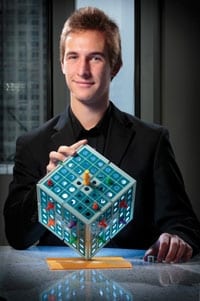
My childhood was naturally creative. When my mom heard I was bored, she’d instruct me to go to the recycling bin, dump it out, and make something with whatever was in the bin. Fake water parks, new shelves for my room, artistic projects, the possibilities were endless! I also loved making ‘contraptions’ which I recently learned were actually named ‘Rube Goldbergs’. I used to take anything and everything from my house and turn it into a contraption- hot wheels, cans, bouncy balls, dominoes, strings, card houses, and more. I loved creating systems that worked with just a little push, it excited me to see those ideas come to life. As a game inventor, now I design environments that can foster emotions that I’d like the players to experience. With just a little push, they can have memorable fun experiences with their friends and family!
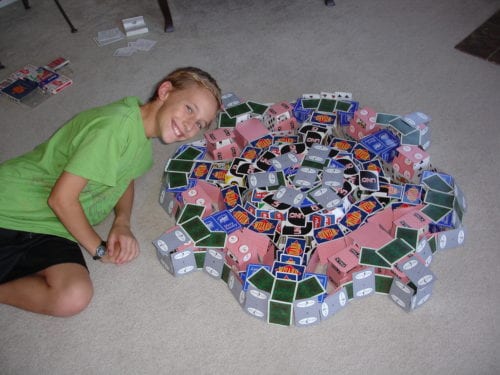
Creation happens when you break away from the intended use of objects. It happens when you ask: “Can this food become a space ship?” or “Can I turn this lump of wood and metal into a Survivor challenge?” Creation is a function of combining disparate concepts, things that shouldn’t normally happen. It’s that smashing of random stuff together that makes invention happen. As adults, we call this innovation- taking a previously working gizmo and making it achieve the same goal in a more efficient way, perhaps by borrowing a solution from a completely different discipline. Parents can encourage imagination by challenging their children to solve problems with objects on hand, even though a magic bullet is right beside you. Children have an innate desire to continue tinkering even through failure, because they believe the solution to be possible. It’s only in adulthood that we block that urge with embarrassment of failure and feelings of self-doubt. Break away from the intended use of products, use lipstick as a marker, use packing peanuts as fake snow, use holographic Kleenex boxes as the backgrounds for your self-designed trading card series! Make your life a little more inefficient and it’ll spark creativity. Don’t give your kids the answers. Give them the goal and the rules of the game and they’ll start to create strategies themselves.
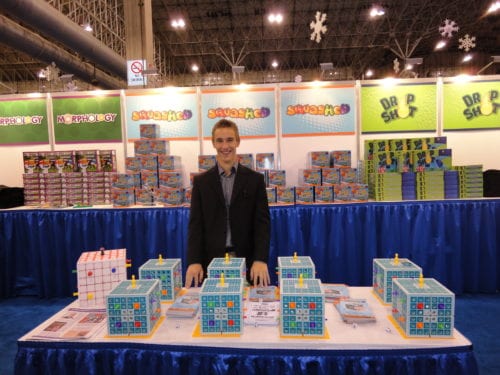
Turning my passion for inventing into a career sort of happened by accident, and a good chunk of luck. My mom saw an ad in the newspaper for the Chicago Toy and Game Fair (ChiTAG)(the only toy and game fair open to the public in the nation) and told my sister and I that we were going. I wasn’t super psyched about it at the time, but I liked games so I went along not knowing that it was going to shape the next several years of my life. There, I saw the Young Inventor’s Challenge. The Y.I.C. was like a science fair, but for toys and games, and there was only a few entries. I walked around and wasn’t super impressed with the entries…having made 20 of my own games to this point. Within 20 minutes of looking at the competition I told my mom that I was going to win it the year after. One year later I won the senior division with a game called That’s Cheating!, a board game version of B.S. where the best cheater wins. I had an absolute blast with the competition and got a chance to meet the President of the Chicago Toy and Game Fair. She said that the ChiTAG Y.I.C. needed some advertising help, and I agreed to expand the Y.I.C. to several schools in the area. To help, I was put on the news and in magazines, all of which grew the Y.I.C. by 500% in one year to 250 entries. I entered again the year after with a game called Squashed and became the Y.I.C.’s first back-to-back winner. Squashed was licensed the following day by Tim Kimber, CEO of PlaySmart, where Squashed lives today. That really made a splash. That, plus a solid, short career in the industry has resulted in being named the Young Inventor of the Year for the entire industry in 2013, and I’m now a finalist for the Rising Star Innovator of the Year. Please vote if you think I earned it. I’m in the 4th category.

I can’t say much about any projects I’m currently working on, since I’m under NDA (non-disclosure agreement), but in the recent past I’ve consulted as a Survivor challenge designer, a theme park ride designer, an immersive theater gameplay director, and more. I’m currently developing a game show run entirely online, and also just started running a Facebook group called Gaming Life, which is focused on applying game metaphors and game ideas to improving your career and life. I have the unique ability to apply game design to any medium and I intend to use it to transform the world into one that is unbelievably fun for anyone who wants to play in it. There is one game that’s coming out December 1st, 2018 though that I’m particularly excited about- it’s called Good Question and you’ll need an Alexa device to play. Just pick a card from the deck to start. On the card is a single word. Your job is to get Alexa to say that word, without saying the word yourself. You can ask any question you want. It’s quite fun, especially with a group. Here’s a sample–Get Alexa to say the following words: Hour, Pepper, Unicorn, Bolt. There’s tons of words in the game, with more rules to play with, but you can play the basic game right in your home, right now. Don’t forget to ask a Good Question.
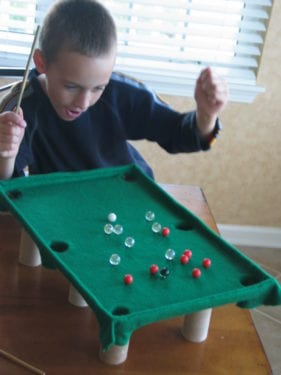
The Young Inventor’s Challenge is always in October. So this is a great time to think about next year’s competition. You can start researching it this year and compete next year. That strategy worked out well for me. If you’re in L.A. instead of Chicago, never fear- there’s a video submission option. I’m not sure if these options can win (they might be able to), but they’ll definitely get judge feedback. All the judges are members of the industry who all have a desire to give back and mentor the next generation of inventors, so it’s quite a supportive community. Here’s the link to register for the Y.I.C.
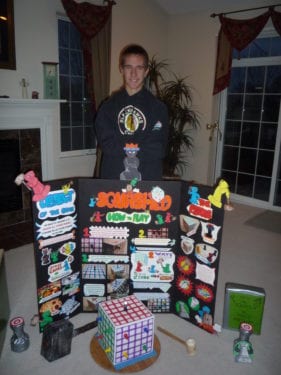
The best advice that I’ve ever received to harness my creativity is to take something I like, find something I can make better about it, and try to make it. Use anything at your immediate disposal and improve over time. It’s how I started designing games. I hated how long the moves in chess took. I just wanted a faster game, so I made one called extreme chess. It was a lot more carnage. Every move basically resulted in losing a piece, or if you used the cannon, you could wipe out entire columns in one shot. I tinkered a bunch with classic games to make my own. Back when I was young, making a game ‘better’ just meant making it more of what I wanted. As I grew older and realized my sister hated playing strategy games with me, I made those same games better by adding a bit of luck, even though I personally didn’t like the addition. It was better because it was more fun for everyone else around me.
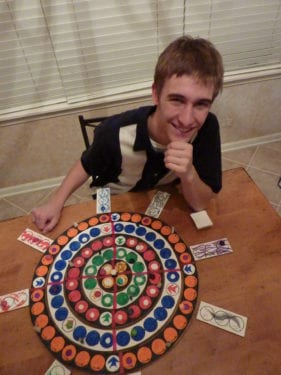
The future of cryptology is in computers, not ciphers. Also, you’re going to love meat in the future. Crazy concept I know. And burritos. When you hit college you won’t even be able to count the foods you like on 2 hands. Also, a slice of pizza every day for a full summer is a bad idea.
Your kids will love discovering the incredible world of technology with these STEM-related games. #PlayLearnConnect
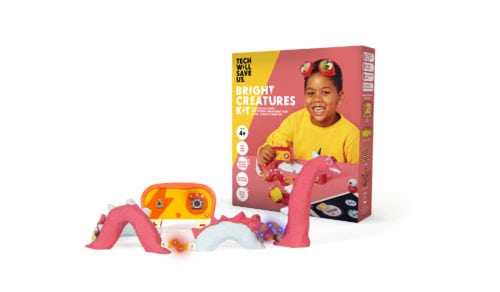
The perfect introduction to STEAM learning – Bright Creatures Kit gets kids building with dough and making simple circuits to add light to their creations. Part of the Dough Universe, the kit comes with three pots of dough, a smart controller, and LED light helpers. And with the projects and games in the interactive storybook app, they’ll be exploring and inventing for months to come!
$49.99
For Ages: 4+
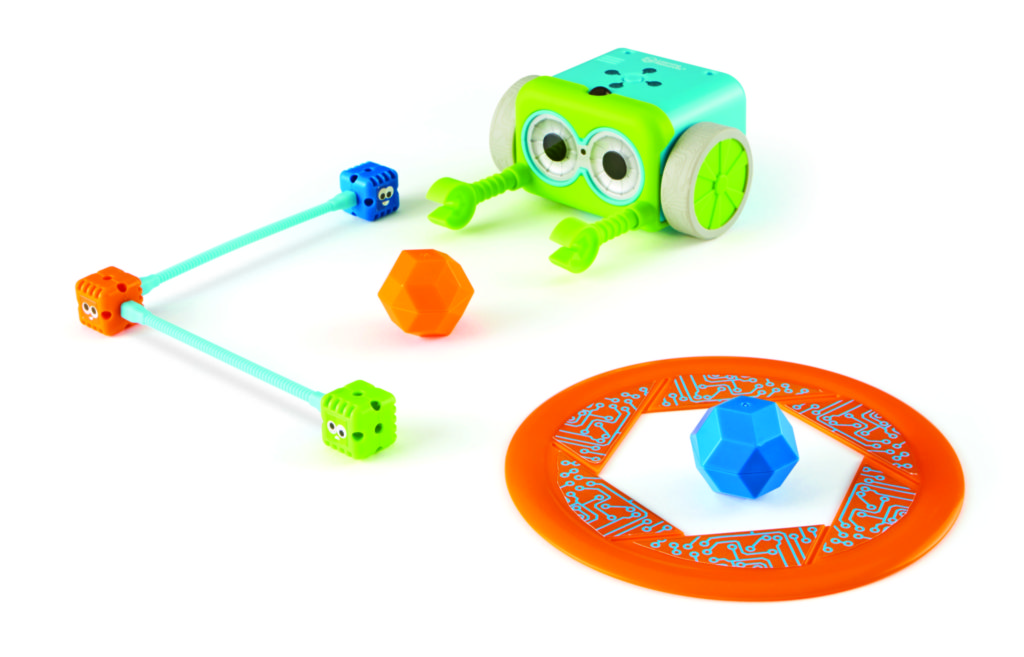
Meet Botley the Coding Robot! With the Botley, children as young as 5 can learn to code. Botley’s advanced features will allow your kids to grow with him. Botley is ready to use right out of the box, 100% screen free and includes a 77-piece activity set. Botley can detect objects, be programmed for if/then logic, follow looping commands and take on obstacle courses.
$79.99
For kids 5+
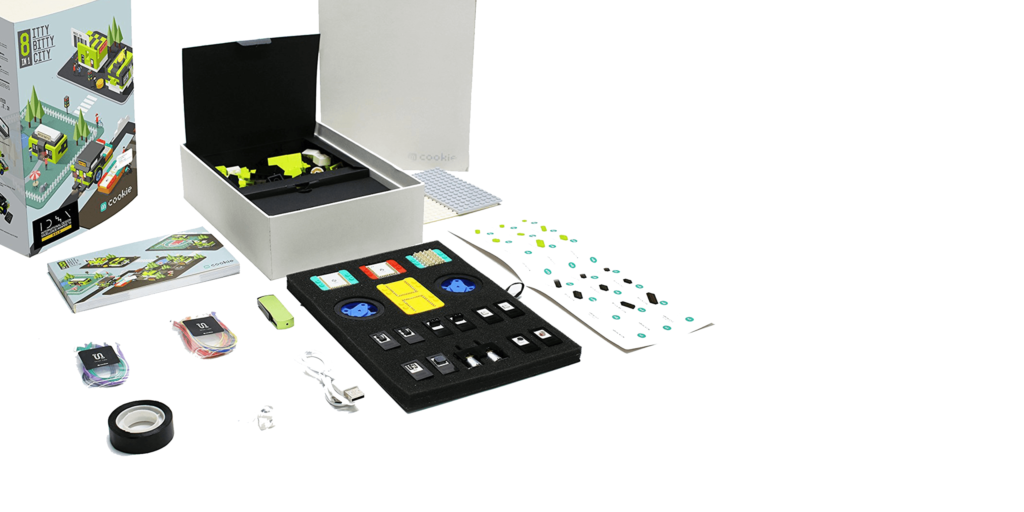
Created for hobbyists, makers, inventors, and tinkerers, Itty Bitty City is a fun-filled collection of Microduino mCookie modules, sensors and accessories which creators use to build eight exciting projects, including a windmill, lighthouse, night light, piggy bank, and music box. Widely used by students and teachers within schools’ STEM/STEAM programs.
$129.00
For kids 10+
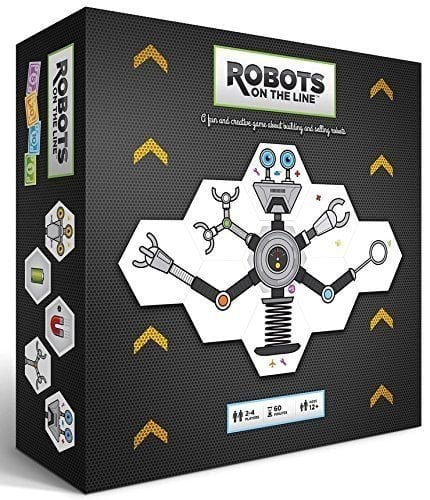
You’re one of the lucky robot factory workers invited to an exclusive event. Pick refurbished or out-of-date parts to build robots that meet eager buyers’ requirements. Sell your completed robots to earn points; but hurry because other players may be building their own robot. Can you outsmart your opponents and assemble a four-wheeler robot with two heads, or a robot with six eyes and four hands before they do?
$54.95
For kids 8+
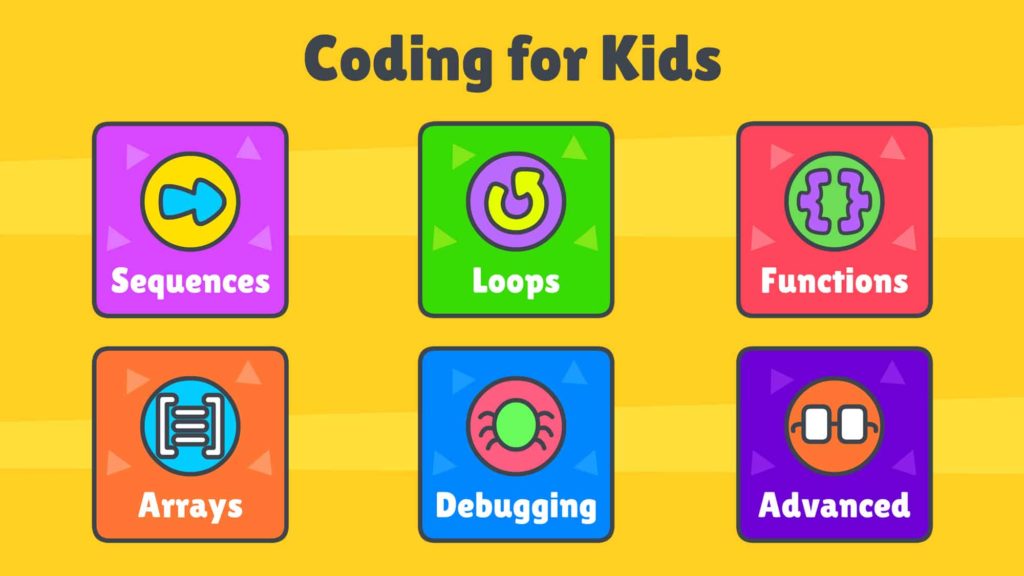
Get your kids coding in no time with Kidlo Coding Games For Kids, a fun app to teach kids (5-9 yrs) basic programming concepts like sequencing, loops and functions. Includes 50+ interesting games.
Free with app
For kids 5-9
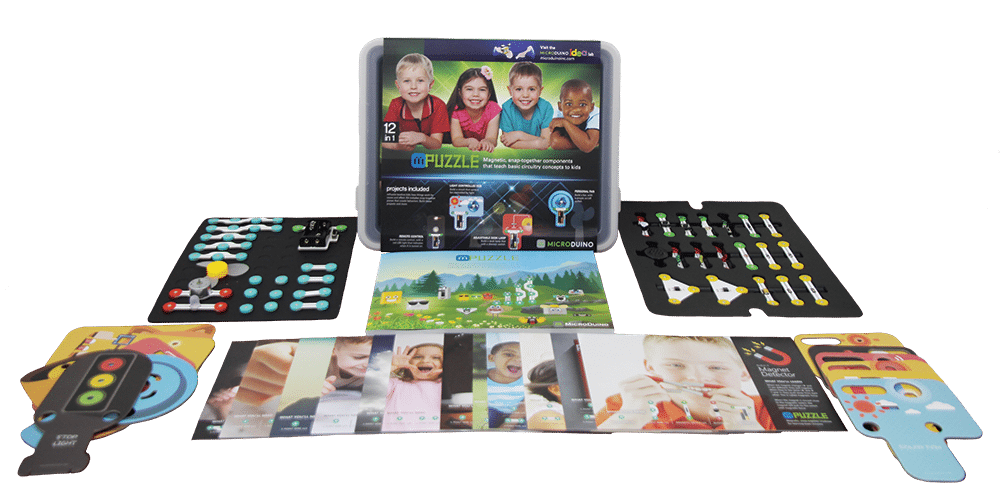
Designed for children ages 5 and up, mPuzzle is a collection of easy-to-use, snap-together magnetic components that teach basic electronic circuitry concepts. With mPuzzle, children learn how things work by seeing cause-and-effect relationships and outcomes. The product offers everything kids need to construct common objects found in our everyday world, such as a street lamp that illuminates at dusk, or a TV remote control with a red LED light that shines when it’s turned on.
$99.00
For kids 5+
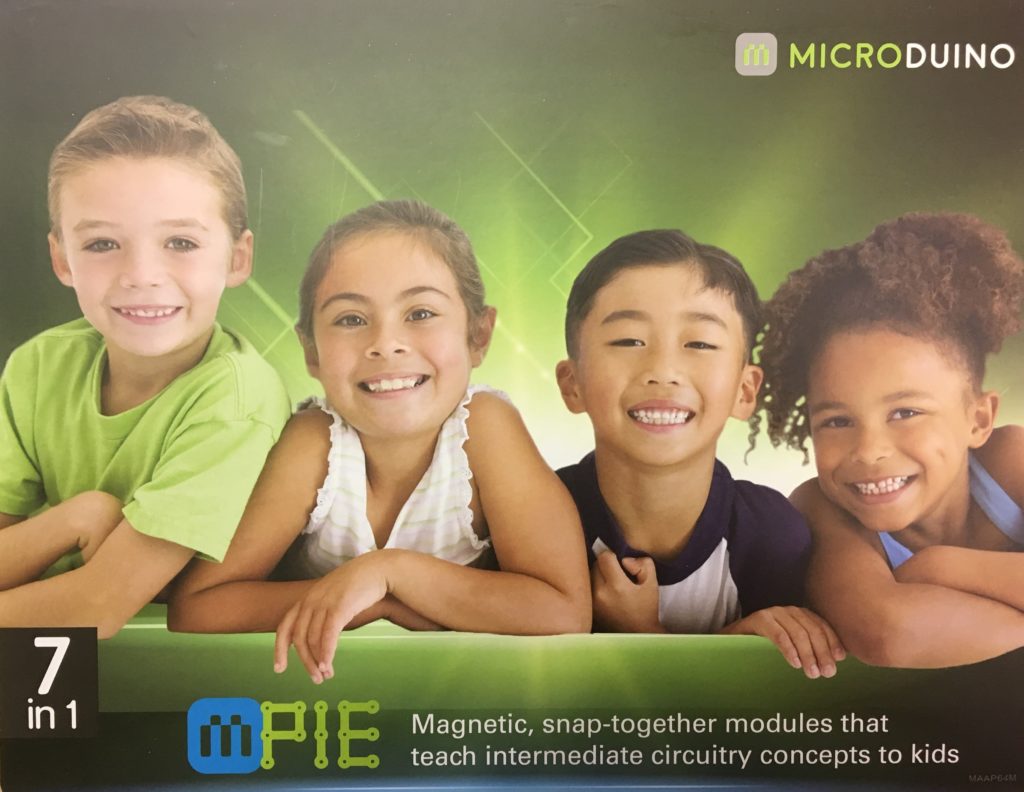
Designed for children ages 7 and up, mPie builds upon mPuzzle’s foundational circuity lessons and hardware components to teach kids introductory hardware coding and more advanced electronic and product design concepts. With mPie, kids discover the world of hardware coding, which helps them visualize the logical and sequential order of things in a physical and engaging way.
$99.00
For kids 7+