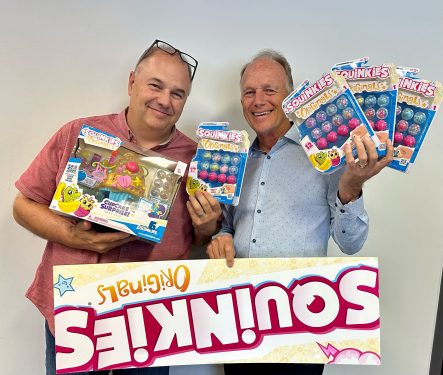
We’re thrilled to chat with Bill Nichols and Peter Cmiel of Blip’s Toys, who have won NAPPA Awards several times.

Thank you for sharing your story with us and our readers.
1. Please tell us a little about your company’s mission.

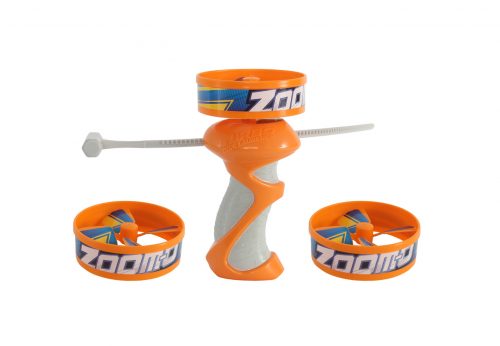
Our mission is to offer innovative toys at reasonable prices.  We think of ourselves as a speedboat among cruises ships as compared to the large toy companies, bringing new products into the market in a matter of months versus years. One example of this was the Zoom-o disc launcher. Back in the mid 2000’s we showed Target stores a working prototype in February and they loved it. The challenge was they wanted it in stores for summer that year!  We challenged our operations team and we were able to build the tooling, complete production and ship it in under 90 days, making it in store by June.  That item has sold millions to date and is still being sold today.

2. What made you want to start this company?

Bill: While working in the toy industry as a frustrated salesperson I saw many opportunities left unanswered. Very few companies actually listened to retailers’ needs so I thought what a great opportunity to actually listen and develop for actual opportunities on shelf.  So, starting Blip allowed me to pursue new products and categories in the marketplace with instant support.

 Peter:  Prior to forming Blip, I worked as a toy inventor and became frustrated in getting manufacturers to bring my ideas to market. With the creation of Blip, I was able bring those ideas from concept to production and into the hands of consumers. Part of that process is not only seeing that item make it to the market, but being in control of the process to ensure that its outcomes match my original vision.

3. Did you have a mentor growing up? And what role did that person play in your life and your career?

Bill: I’ve been very Lucky. I had many mentors, in all areas, toy sales, design, retail merchandising, product development.  It’s important to listen and play out of your comfort zone.
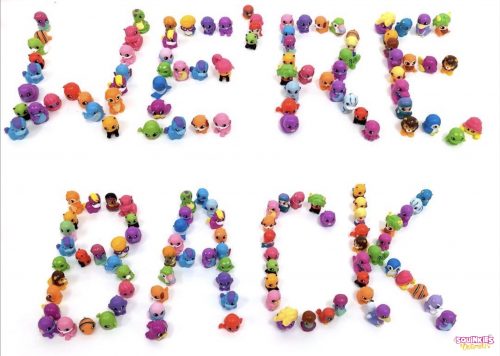
 Peter: One of my key mentors was my first employer out of college. He was an ex-Tonka toys executive and introduced me to the complex toy world.  When I first started, I asked him what my job description was and he said, “anything I don’t want to do”.  Our main focus was toy inventors and were able to successfully license various products. My time spent with him was invaluable as he included me in all steps of the process. One of my favorite memories during that time was when we travelled to the London Toy show.  It was my first toy show and trip overseas. 

4. Best life advice you received growing up?

Bill: you get to choose every day, good day, or bad day when you start, choose good!

 Peter:  As it relates to one’s professional career, I was told people want to work with people they like.  While simplistic, it helped me keep understand the benefit of working in a team and staying out of the politics and drama as much as possible.

5. How has parenthood changed you?

Bill: I have three adult children and one grandchild. The benefits of having children and being in the toy industry is invaluable.  It forces you to use your own experiences when developing products. My 3 kids would give a very different answer, they would talk about how many of their toys went missing and never came back. “dad” was always watching how they played with them and then the ones they played with the most would disappear. Later they realized I was like “Sid” from Toy story and was always recreating / designing new toys from old.
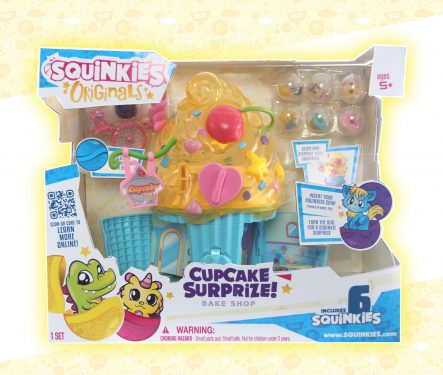
Peter:  I have two teens (16 & 18) and they provided a tremendous amount of insight into toy design at their various stages of their development.  We spent a lot of time together playing with our new toys learning what works and what doesn’t.  It was interesting to see what they gravitated towards and as a toy maker I tried not to influence them with things I brought home as I really wanted genuine feedback.  In my experience kids want to please you and will tell you they like something if they think you do as well.  My children were at a great age, 3 &5 when our big hit toy brand Squinkies came to market, and they were an instant hit with them!  The industry had never seen a toy IN a capsule, so Squinkies was a pretty big innovation in the market.  They loved the collectability aspect and their squishy tactile feel.  And having all of our kids be able to play test it and give us feedback on the tiny characters was just invaluable.

6. When not working, where will we find you?

Bill:  sadly, at retail walking thru ALL the aisles looking for new and innovative ways to merchandise. For total relaxation, boating with family on the lake.

 Peter:  I’m often in my shop tinkering with new ideas.  My day is filled with meetings or emails leaving me with a desire to use my hands.  I find it satisfying to build something tangible that has a purpose.  Sometimes it’s a simple shelf system for the home or a crude mockup of a new toy idea that helps define a designs shape or scale.  My background as an industrial designer laid the foundation of the various steps of product development, ideating, drawing, prototyping, etc. that I enjoy to this day with all my projects.

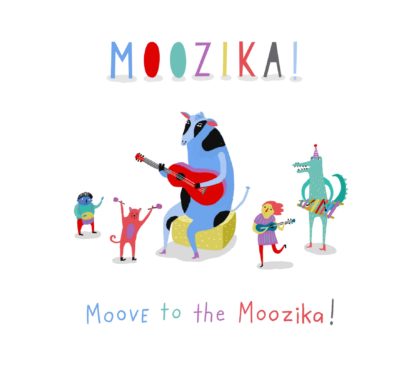
 

Give your family the gift of music this holiday season!

Moove to the Moozika!

A playful collection of city-based adventure songs in both Spanish and English featuring an eclectic mix of styles – folk, jazz, samba, blues, ranchera, pop, Latin, rock, and house music. $14.99, www.moozika.com

Put Your Arms in the Air!

Get ready to sing, dance and expand your imagination. $12.00, www.amazon.com

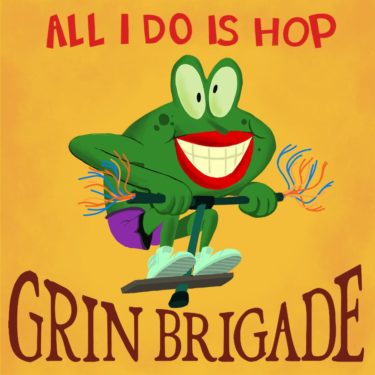
 All I Do Is Hop by Grin Brigade

An eclectic and unpredictable mix of 29  songs featuring a blend of kid funk, blues, pop, rock, country, anthem and ballad. $14.98, www.songwizard.com

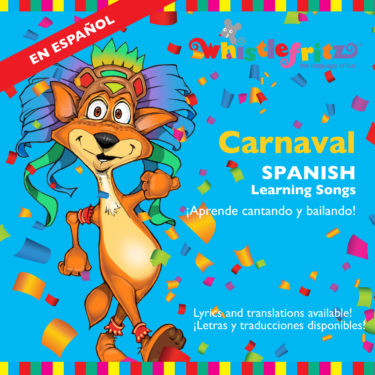
 CARNAVAL – Spanish Learning Songs

Embark on a musical celebration featuring merengue, calypso and soca to New Orleans brass, jazz and country,. $14.99, www.whistlefritz.com

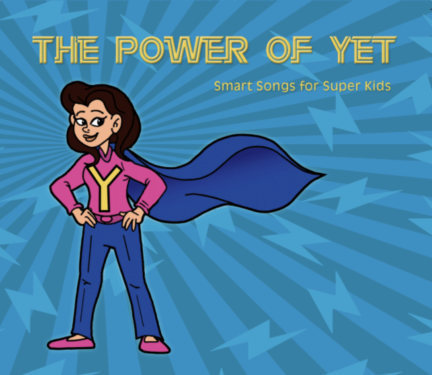
The Power of Yet – Songs About Growth Mindset

Brings together upbeat songs about growth mindset in a singalong-friendly range. $15, www.curriculumrocks.com

Beneath the Cherry Tree

A whimsical musical tribute to the profound beauty of nature. $15, www.karestrongmusic.com

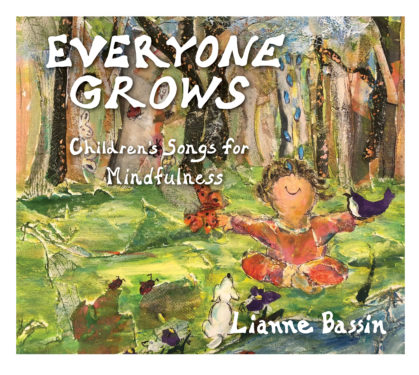
Everyone Grows: Children’s Songs for Mindfulness

Designed to help children pay attention to themselves, others and their surroundings. $15, www.liannebassin.com

Bubba & Boo

Multi-instrumentalist, Megan Schoenbohm, is an earthy, edgy, free-spirited songbird, who takes the audience on a mellifluous journey through themes of kindness, humanity, creativity and imagination. $15, www.musictimewithmegan.com

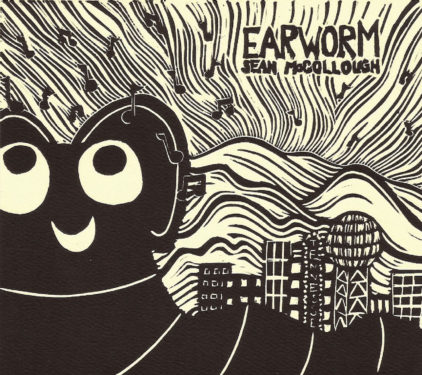
Earworm by Sean McCollough

Featuring 13 stick-in-your-head original and cover songs and guest artists such as Billy Jonas and Molly Ledford. $13; $9.49/digital, www.seanmccollough.com

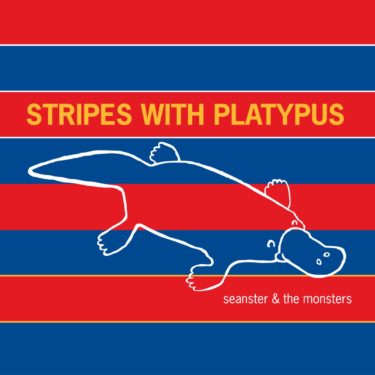
Stripes with Platypus by Seanster and the Monsters

Full-length album with absurd, silly humor, as well as more heart-felt matters of childhood. $15.00, $9.99/digital, For Ages: www.store.cdbaby.com

Total Eclipse of the Rainbow

Positive, joyful, high-energy collection of songs that will enhance children’s learning and social development. $9.99, www.rainbowrockband.com


For more holiday gift ideas, visit NAPPA Awards! #playlearnconnect 

We were lucky enough to speak with Dr. Eileen Kennedy-Moore, a child psychologist and author of several books. Her most recent work, “Growing Friendships: A Kids’ Guide to Making and Keeping Friends”, is a refreshingly humorous look into the complicated realm of children’s friendships.


What inspired you to write “Growing Friendships”?

I am a clinical psychologist and mom of four. Both personally and professionally, children’s friendships are deeply important. Just about every child will struggle socially at some point, and it’s important to understand this is part of growing up. I wanted to help parents and children navigate these obstacles in a light, funny and informative way.

What are some of the common obstacles kids face when developing friendships?

We need to be able to flexibly adjust our behavior to the social situation. There are five fundamental skills outlined in the book; reaching out to make friends, stepping back to keep friends, blending in to join friends, speaking up to share with friends, and letting go to accept friends. It’s important for parents to know that friendship problems are very common. It’s important as parents to navigate, not dismiss their friendship struggles. If you want your child to be more engaged and less likely to be bullied, help them make friends. It’s often good to help kids have multiple groups of friends, as when you have difficulties with one you can find comfort in the other. Also, given the number of friendship breakups, if your child has other friends as well it makes it easier to weather those. Encourage them to have a bus stop friend, a math friend, and a soccer friend. All of these friendships have value and greatly enrich their lives.

What can parents do if their child is having trouble making friends?

Offer empathy; as support and acceptance at home is very important. Give them a little extra loving and see if you can figure out exactly what happened. If your child comes home and said another child kicked his chair, it might take some questioning to figure out he also asked her to move out of his way ten times. It helps get a sense of what’s going on, especially if it’s a repeated pattern. From short-lived toddler friendships to the more intimate relationships of teens, it’s about teaching them perspective. Play The Maybe Game, and try thinking of possible explanations for other kids’ behavior other than they were just trying to be mean. By helping children get a glimpse of reasoning, we can do a lot about helping kids problem solve.

How do parents know when kids are testing out their newfound social skills or just being mean and taking part in bullying?

Bullying is a deliberate act of meanness directed towards a targeted child, and there is usually a power difference meaner, older, stronger, tougher, or more popular. I do think there is an important distinction between bullying and ordinary meanness, and true bullying usually requires adult intervention. This doesn’t mean you need to overreact to ordinary bumps in the road. Our first instinct is to leap into solve it for our kids, but friendship struggles are something that helps children become stronger. We don’t become masters of social situations at 9-years-old, its a lifelong learning process.

If a child is being bullied, how do parent’s approach the issue? Do they call the other parent or talk to the teacher?

It’s usually not a good idea to call the other parent, everyone is going to feel fiercely protective of their own child. The best course of action is to talk to the teacher, and find out what they see. Having a teacher keep a closer eye on the problems can usually settle it down. No child ever deserves to be bullied, and we want to address the behavior directly. We also want to find ways on a practical level that will keep the child from being targeted. Stay around their friends at recess or stand close to a teacher. They can also loudly point out ‘that was a mean thing to say’, which will direct the attention off of them and onto the child responsible for the bullying.

How can parents open up the conversation to empathy and communication when teaching their children about relationships?

I think we can do it all the time. We can do it whether we’re talking about our own experiences, or we can do it in the context of movies, books, TV shows. In Growing Friendships, we wanted to have a light hand here, which is why we deliberately made it funny. The best way to use this book is to read it with your child. Ask questions like: Do you know anyone like that? What would you do in this situation? How would you react to someone being mean? Connect with your child, and bring the information home. The number one response I get to this book is ‘I wish I had this when I was a kid’. It’s important to recognize these skills apply to adults too, as our social skills are ever growing.

What is the best piece of friendship advice you ever received?

“Kindness is the key to friendship.” There this magnet myth surrounding friendship, that children need to be able to draw friends to them. The difficulty is nobody wants to be the steel. Those aren’t friends, those are fans. My family moved across the country and overseas when I was growing up, so I learned to make friends across new schools and new cultures. I think I learned to focus outward, and if the other person feels good in your company, that’s the most important thing.

Don’t Miss Out On The Fun

Sign up for our ENews and be the first to know the latest on toys & family must-haves, giveaways & gift and play ideas!

No Thanks Let's Connect

Family must-haves, articles & giveaways