Cupcake Recipe from Raddish Kids

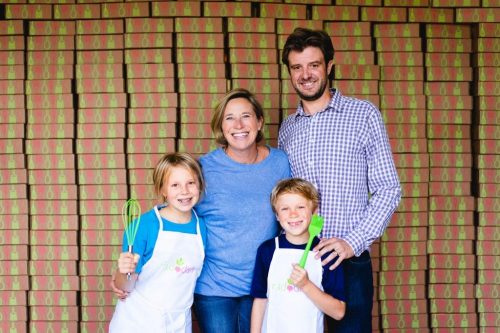
Raddish Kids founder Samantha Barnes with her family. Photo Courtesy of Raddish kids

Samantha Barnes used to teach cooking classes to kids all over L.A., offering after-school enrichment programs, summer camps and weekend parties through her company Kitchen Kid. Years before the coronavirus pandemic, she decided to bring her lessons into home kitchens instead. “Really, the most important place to learn to cook is your home, and it’s a really powerful activity for families to do together,” Barnes says. Seven years ago, she created Raddish Kids, a cooking club that ships monthly kits and recipes to families across the country.

Barnes is a former middle-school teacher with a 10½-year-old daughter (a vegetarian and baking enthusiast) and an 8½-year-old son (lover of sloppy Joes and banana bread), so she’s got some great tips for bringing kids into the kitchen. Her first is not to try to hurry your cooking projects. “Make sure you have enough time,” she says. “Cooking takes time, and when you’re baking it takes even longer.”

Another great tip is to let kids practice essential skills before you tackle a recipe. “It took me years before I’d let my kids measure into muffin cups, because half the batter would be in between the cups,” admits Barnes, whose kids help her test Raddish recipes. She suggests filling a liquid measuring cup with water and letting your kids get a feel for pouring with that before you tackle this cupcake recipe. “Once you get that skill, you can do cupcakes and muffins and all sorts of things,” she says. You can also let your kids put on oven mitts and practice moving pans in and out of a cold oven to give them confidence.

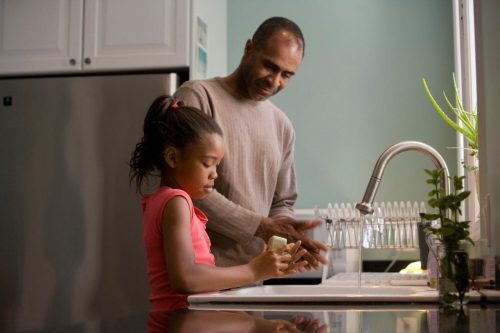
To keep kitchen mess to a minimum, put a sheet of wax paper over your counter before the kids measure ingredients. Wrap up with a big sink full of soapy water and let your kids scrub the dishes.

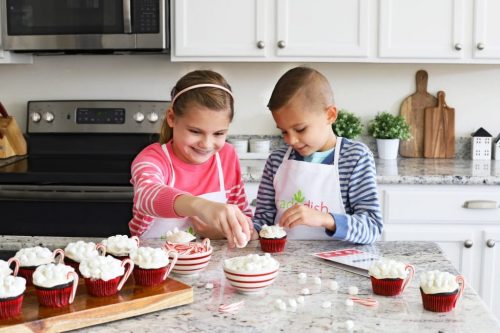
For families that might be missing some of their usual holiday traditions this season, Barnes recommends creating a new food tradition. “Food is so inextricably linked with memory, that’s a great way for kids to develop their own personal food story for when they are older and have their own family,” she says. Barnes will be enjoying the usual Christmas Eve raclette (similar to a fondue), Christmas Day posole and New Year’s Eve “fancy food” hors d’oeuvres with her family. Maybe your kids would like baking these adorable cupcakes. “When they are put together,” she says, “it really does look like a cute little mug of hot cocoa.”
Cupcake Recipe from Raddish Kids

Hot Cocoa Cupcakes from Raddish Kids

For the cupcakes

¾ cup flour

½ cup cocoa powder

¾ teaspoon baking powder

¾ teaspoon baking soda

½ teaspoon salt

1 egg

1 cup sugar

¼ cup canola oil

1 cup milk

1 teaspoon vanilla extract

For the topping

¾ cup butter, softened

½ cup powdered sugar

1 teaspoon vanilla extract

7-ounce jar marshmallow fluff

2 tablespoons milk

12 mini candy canes

¾ cup mini marshmallows

Preheat the oven to 350 degrees. Line a muffin tin with paper liners or spray with nonstick cooking spray.

In a medium bowl, whisk together the flour, cocoa powder, baking powder, baking soda and salt.

Crack the egg into a large bowl. Throw away the shells and wash your hands.

Add the sugar, oil, milk and 1 teaspoon of vanilla extract to the egg. Whisk until combined.

Add the flour mixture to the egg mixture. Whisk until smooth.

Transfer the batter to a liquid measuring cup and fill the muffin cups evenly with batter.

Bake the cupcakes for 17-20 minutes, until a toothpick inserted in the center comes out clean. Let the cupcakes cool 10 minutes.

Meanwhile, make marshmallow frosting. With an electric hand mixer or in the bowl of a stand mixer, beat the butter, powdered sugar and 1 teaspoon of vanilla until creamy.

Add the full jar of marshmallow fluff and 2 tablespoons of milk. Beat the frosting until it is smooth.

Use a butter knife to spread frosting on top of each cupcake.

Top the frosted cupcakes with mini marshmallows.

Set one candy cane on the side of each cupcake to create a “handle.” Taste and share!
We have great new NAPPA Award winners to share with you – something for every interest.

Digital Fun & Learning

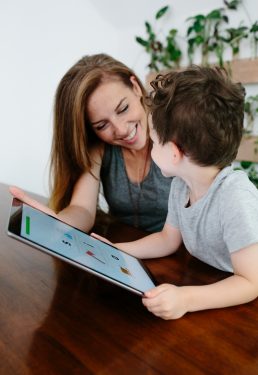
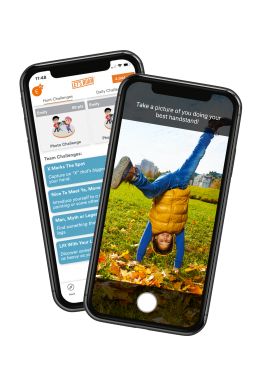
Get ready for an adventure with the Let’s Roam App, great for curious kids and families. Explore like never before as you take on riddles, trivia, and photo challenges. The in-home educational scavenger hunts come in seven selectable-themes that transform your home into a world of creativity. Outdoor scavenger hunt tours allow families to discover any city, learning its history, and seeing remarkable sites. Every hunt comes with downloadable photos and built-in memory-making technology. $12.99, ages 3+.

TutorMe is an online tutoring platform for individual learners that provides 24/7 live, on-demand support in 300+ subjects with qualified tutors. Using their personalized approach, TutorMe helps students regardless of ability, resource, skill level or age not only improve academically but also gain support so they never feel lost. Prices vary, ages K-higher education.

Duolingo ABC is a free app that teaches children how to read. Developed by learning experts, the app includes over 300 fun, bite-sized lessons building on prior lessons and guides children on a step-by-step path to reading. Duolingo ABC is aligned with Common Core standards and is based on recommendations by the National Reading Panel. Ages 3-6.

Love Music

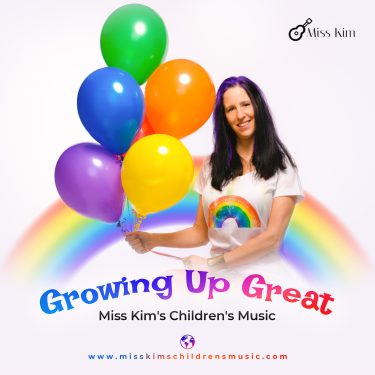
Get up and dance with Growing Up Great, an eleven song musical CD for children created during the pandemic. The songs are energetic and filled with sweet reminders about being kind. $9.99, ages 2-6.

“To Awaken the Sun” is an album of classical music recorded to take music into public schools, with CD sales benefiting the Oklahoma Foster Youth. An acclaimed cellist, Remy-Schumacher has created this album that is predominately instrumental – beautiful for all ages. $15.

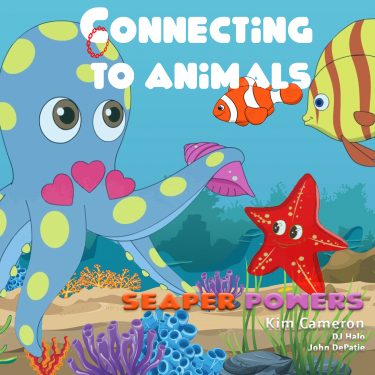
The Seaper Powers Connecting to Animals album is all about our connection to animals, making friends, and how important it is to accept people for their differences. Sing along to Tropical House sounds, Reggae Beats, Calypso Rhythms, Jazzy notes and colorful vocals. $8.99, ages 4-17.

Mix Fun & Learning

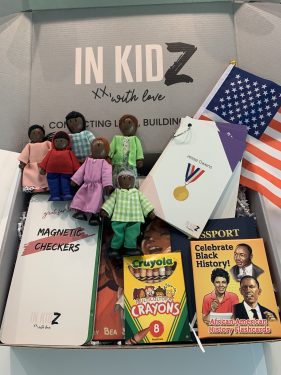
In KidZ expands children’s knowledge of different countries and customs through fun memorable experiences. Chocked full of activities and games, kids will be able to share details about a country without having to get on a plane or get out their passport. Both the America box and Diwali box include interactive learning items, like language flashcards, puzzles, books, games, flags and more. 50/monthly or $49/per box, ages 2-11.

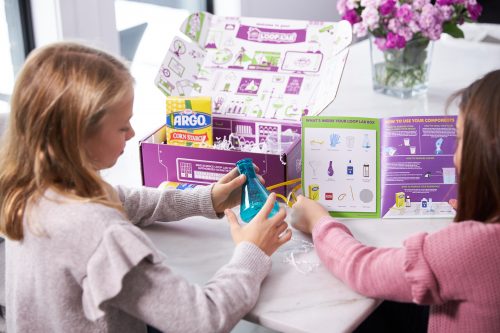
Loop Lab STEM Subscriptions are created by the folks at Mad Science to bring science enrichment home. Each box has a different theme and step-by-step instructions. $32.99/per box, ages 8-12.

MindLabs Energy and Circuits is a magical STEM learning tool for children that combines a digital app, physical cards and augmented reality in a fun and exciting approach to learning core science concepts. $24.95, ages 8-11.

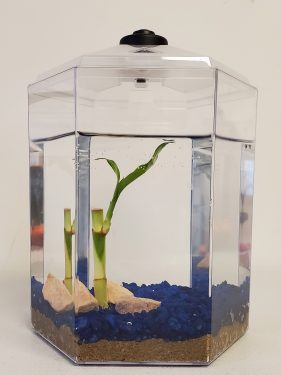
Bring a miniature ecosystem home with Froggy’s Lair BioShere. Each one-gallon tank comes with bioactive sand, colored gravel, a piece of living bamboo and 2 African Dwarf Frogs. All you have to do is change water every three months and feed these swimming, hopping frogs two times per week. $69.95, ages 5+.

Orbital Velocity is a space-themed numerical strategy board game where players are rocket scientists. Game focuses on math, physics, and AI, introducing kids to the concept of decreasing orbital velocity (explained in the rulebook) and gross vs fine acceleration. $19.99, ages 10+.

For more product reviews, visit nappaawards.com


Having a baby is a magical, special time. But it’s also a time of sleepless nights, endless laundry and new responsibilities. It’s amazing how everything changes – our emotions, our relationships and all the stuff we now need. We know this process well. For 30 years, we have been testing and evaluating family products to bring you the very best. We are thrilled to share this year’s Bundle: Baby, Toddler and New Mom Gift Guide.

The guide is filled with more than 100 gift ideas. Take a look inside where you’ll find perfect gifts for moms — everything from cozy robes to pregnancy earbuds. You’ll also find unique and plush gifts, items for your home and car, plus baby essentials like monitors, bottles, strollers, skin care products, high chairs and more. And of course – toys! Lots of fun and colorful items to engage babies and toddlers’ natural sense of curiosity and exploration.

While back-to-school will definitely be different this year, it’s important to make it as exciting and normal as we can for our kids, whether they are heading back to a physical campus, distance learning, pods or a hybrid of some kind. These recent NAPPA Award winners provide a great way to get the school spirit going.

Keep Positivity Going

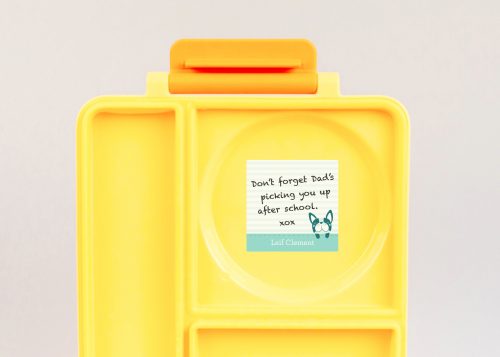
Provide an uplifting daily message for your kiddos with these adorable Washaway Lunch Box Notes that will completely disappear each night! These personalized peel-and-stick labels will adhere to the outside of your kid’s lunch container every morning so you can write them a daily message. Once you’re done with it, the label will disintegrate quickly in water, whether you wash the lunch box by hand or in the dishwasher – no soaking or scrubbing required.  Available in 8 adorable designs. $17.


A Fun Treat


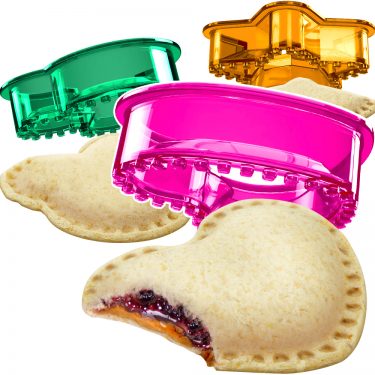
Don’t pay a fortune on store-bought crustless sandwiches. Instead use your creativity and healthy ingredients to create fun snacks and meals. BWICHED Sandwich Cutter and Sealer by Savoychef is changing the way we eat a sandwich by creating a tool to make it more enjoyable. $17.99.


Get Organized

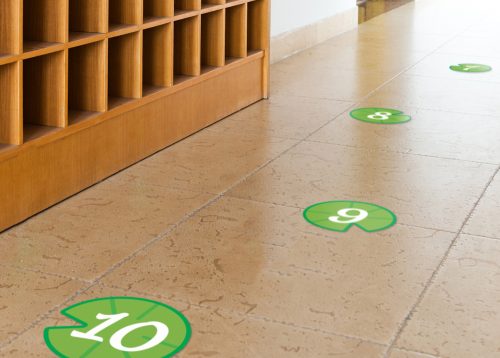
Get organized with Classroom Lineup Floor Decals and Classroom Name Tags from Mabel Label’s. The durable, non-slip floor stickers are a fun and useful addition to any classroom, whether you need to guide students where they should line up or where to sit. The strong material will adhere to most floors, including low pile carpet. Classroom Floor Decals are easy to apply, wipeable and removable when you’re finished with them. Available in 8 design choices and a wide variety of color options. $18.

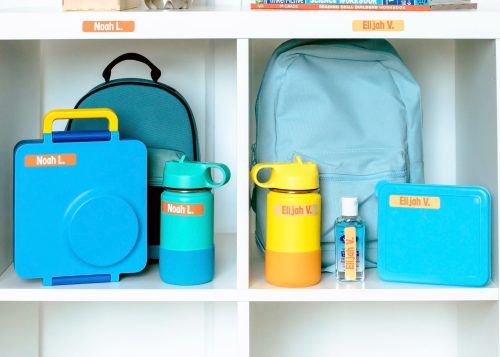
The class name labels can be customized with up to 30 kids’ names so that teachers or parents can label individual items around the classroom or study area like kids’ cubbies, shelves, bins and more. The labels are super-durable and waterproof but are also removable at the end of the school year. Classroom Name Tags are a great tool for keeping students’ items organized and separated this school year and they help curb the spread of germs in the classroom Available in a wide array of color choices. $18.

The Easy Up Reusable Multi-Purpose Utility Hooks are super handy anywhere — at home or in the classroom. Infinitely versatile and made out of high-quality plastic, free from phthalates and BPA. Because of the arch shape and the gripping pins these hooks can be squeezed and released in any corner between wall and ceiling and easily removed without leaving noticeable marks, allowing for hassle-free hanging. $15.95

Add Some Style

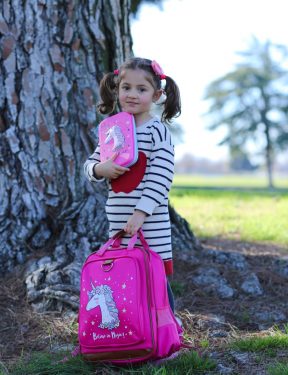
This Pink Unicorn Backpack by JOJOOKIDS is bright and fun and features 3 easy-access compartments, 2 side elastic pockets for water bottles and adjustable padded shoulder straps.  Great for kindergarten or elementary school. $35.

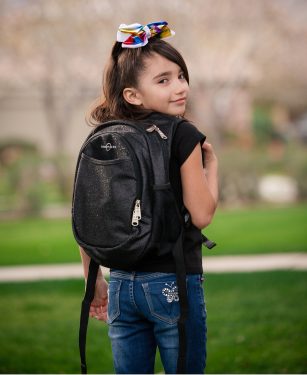
The Obersee Preschool Sparkle Backpack collection has a simple yet stylish design, perfect for kids who love glitter and glam. Features zippered insulated front pocket to keep lunch and snacks cool and a side pocket to hold a water bottle or thermos. Comes in 8 vibrant colors and make a grate tote for gymnasts, ballerinas, soccer players, and cheerleaders. The small, compact size is easy to carry for younger kids. $34.99.


For more product reviews visit nappaawards.com

It’s probably been a while since you actually sent your kids off (as in out of the house) to school. All signs indicate that it could be a while longer until you do, but any school day, even a day of distance learning, should start with the right breakfast fuel.

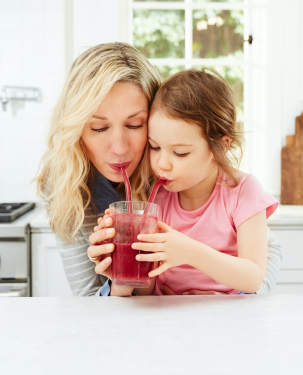
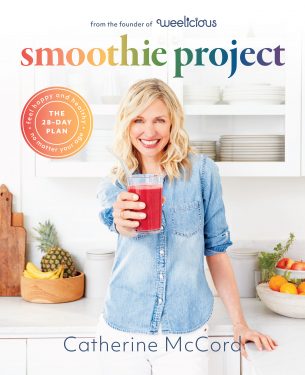
In 2015, Catherine McCord realized that wasn’t happening at her house. That’s a surprise, since she is the mom behind Weelicious, a website devoted to simple and healthy recipes for the whole family. Her son, the oldest of her three kids, was experiencing unexplained headaches, nausea and fatigue. McCord eventually identified breakfast as the culprit. The family was eating a super-healthy diet the rest of the day, but in the morning, she was letting the kids have the pancakes, waffles and toast they requested.

She realized that these foods weren’t giving her son what he needed to start his day. Smoothies became the family’s new breakfast, her son’s health problems disappeared and McCord wrote “The Smoothie Project,” a cookbook with almost 100 smoothie recipes to fuel healthy eating.

“The idea is that all the smoothies have fruit and vegetable and protein, and that they’re keeping you full and energized,” says McCord. “Having a smoothie a day means you’re replacing a meal that might not be as good for you.”

To get your family in the smoothie-a-day habit, McCord’s book proposes a 28-day plan: Have a smoothie for one meal a day for 28 days and you’ll notice a difference in your body, she says. “Then you have two paths. You can have mac and cheese or chocolate ice cream later in the day and feel less guilty because you know you had a good meal already, or you can feel so good that you want to keep the feeling going, and you’ll make better choices,” says McCord.

The book has smoothies to suit every flavor preference, including coffee- and chocolate-based smoothies, tropical, berry heavy and seasonal options. There are also chapters to help simplify smoothie making, a bit about blenders, nutritional information and a thorough guide to the types of “super boost” ingredients you’ll find in the supplement aisle at Gelson’s. “There’s something for everyone, depending on your flavor preference and what you’re trying to get done in your body,” says McCord.

Through the online community McCord built using #smoothieproject, she has heard how smoothies have helped parents with picky eaters, parents trying to minimize their kids’ processed-food intake, people trying to lose weight and even senior citizens. One Potato, McCord’s family meal-subscription service, recently added smoothie kits to its menu of options.

Want a taste of what it’s all about? All you need is a blender (a high-powered one, if possible, and McCord suggests borrowing a friend’s rather than buying one if you’re just getting started).

A great gateway is this Blueberry Cherry Lemon smoothie, which McCord says is an “antioxidant bomb” with tons of nutrition and flavor.

Blueberry Cherry Lemon Smoothie from ‘The Smoothie Project’

Serves one

¾ cup (111 grams) frozen blueberries

¼ cup (38 grams) frozen cherries, pitted

¼ lemon (with peel and pith), seeds removed

2 tablespoons coconut yogurt

1⁄8 teaspoon ground cardamom

1 tablespoon hemp seeds

1 tablespoon honey or blue agave

¾ cup (180 milliliters) almond milk or milk of choice

Combine all the ingredients in a blender and blend until smooth. Enjoy!

Ready for some family fun! Check out these new NAPPA Award winners!

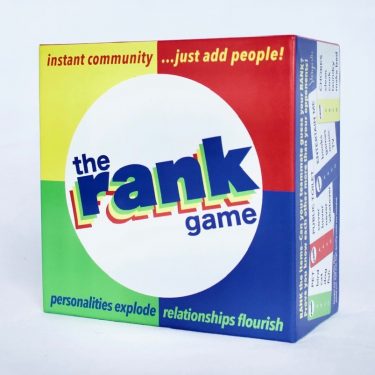
The Rank Game by Storyastic

A super-fun game about YOU and your people–and your likes and dislikes. How well do you know each other? Can your teammate guess your RANK? $30.00, ages 8+, storyastic.com

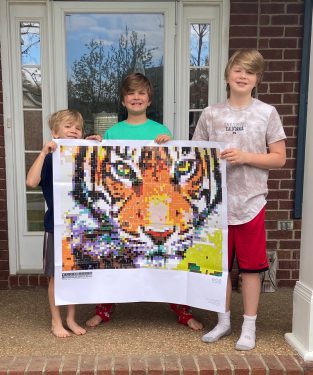
StickTogether Mosaic Puzzle

Like paint-by-numbers, but with stickers! A great activity for the whole family, maker spaces, community-building events, reading challenges, and more! $36.00, ages 5+, letsticktogether.com

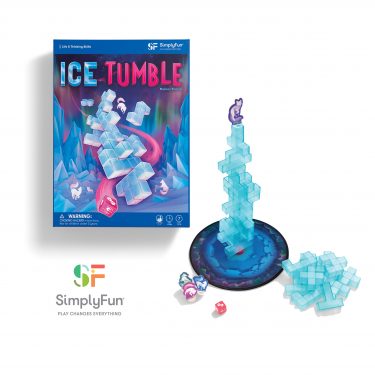
Ice Tumble

The first player to successfully place all of their ice blocks and their fox pawn on the sculpture wins the game. The blocks are slippery so be careful or the sculpture may come tumbling down. $36.00, ages 7+, simplyfun.com

Crystal Cup Rally

A fun three-dimensional game that will have players practicing their planning skills and adapting to new conditions. Race around the track, planning which paths to take in order to get ahead. $38.00, ages 7+, simplyfun.com

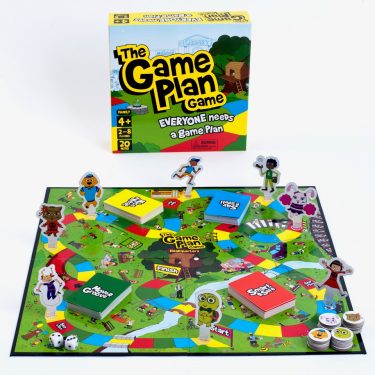
The Game Plan Game

Addresses every day teachable moments that aim to normalize conversations around safety and flexible thinking through the medium of a board game. $19.99, ages 4+, gameplangame.com

For more award-winning products, visit NAPPAAwards.com

This summer will be different, but as parents we need to do all we can to create fun and a sense of calm for our kids. So this summer, turn your backyard into the FUN ZONE! Our NAPPA Awards Guide to Summer Fun is here to help you bring that carefree vibe home. We have toys, family games, music, recipes and much more. Happy Summer!


Ice cream scientist Maya Warren. Photo by Jeff Miller/UW-Madison

Maya Warren has a job title that would get most kids’ attention. She’s an ice cream scientist. Translation: Warren is senior director of international research and development/tastemaster at Cold Stone Creamery, and has a doctorate in food science from the University of Wisconsin-Madison, specializing in frozen desserts. After being introduced to food science through the Food Network show “Unwrapped,” she decided to combine her passions for ice cream and chemistry to create a career that lets her do what she loves every day.

While her favorite ice cream flavor fluctuates between cookies and cream and a double-buttered candied pecan that is her own creation, the L.A.-based flavor maker finds inspiration for new flavors everywhere. “Whether it is at a fine dining restaurant, the candy or yogurt aisle at the grocery store or just following up-and-coming food trends across the globe, creativity is always around us,” Warren says. “It is really fun to push the envelope with ice cream flavors.”

Honey, cornbread and blackberry jam? Thai curry, peanuts and lime? Why not! “The flavors you can make are totally endless!” Warren says. “Now, not everything will taste amazing, but you never know when you might develop an amazing flavor that will leave people wanting more.”

What does she eat when she isn’t eating ice cream? “I love a great plate of veggies,” Warren insists. “I pretty much add spinach and broccoli to anything and everything … except ice cream. I’ve definitely not tried spinach or broccoli ice cream!”

The recipe this ice cream scientist has shared is the no-churn variety, which means you can make it without an ice cream maker. She says both varieties are very tasty, and that the main difference is in the process. No-churn recipes involve whipping the cream separately to create foam and give the mixture lightness, which wouldn’t be efficient for large-scale production. Ice cream that is churned freezes a prepared mixture and uses the machine to incorporate air during the freezing process.

Using this no-churn recipe, you create the base, then let your creativity loose to create your own flavor combinations. “Layer in whatever your creative mind and taste buds desire!” says Warren. Want more inspiration? Follow the ice cream scientist on Instagram, where she hosts live “Ice Cream Sundays with Dr. Maya,” demonstrating her recipes so that families can follow along.

The No-Churn Ice Cream Recipe:

2 cups (1 pint) heavy whipping cream, chilled

1¼ cups of sweetened condensed milk (approximately one 14-ounce can)

¼ cup evaporated milk

2 teaspoons vanilla extract

Inclusions of your choice – broken/chopped cookies, sprinkles, caramel and/or fudge sauce, etc.

In a large mixing bowl, combine the sweetened condensed milk, evaporated milk and vanilla extract.Gently mix with a spatula until homogeneous, then set aside.

Pour the heavy whipping cream into a smaller mixing bowl. Starting on the lowest speed to avoid splashing, then gradually increasing to the highest speed, whip with a hand or standing mixer until whipped cream forms stiff peaks, about 3-5 minutes. Be careful not to over-whip the cream or it will turn into butter.

Using a spatula, scoop and gently fold the whipped cream into the sweetened condensed milk mixture until all of the cream is folded in. This now becomes your ice cream base – set aside.

Grab your storage container and a ladle. Using the ladle, scoop a layer of ice cream base into the container. Spread a layer of inclusions on top. Add another layer of ice cream base, followed by another layer of inclusions, and alternate until all of your ice cream base and inclusions are in your container.

Place a lid, plastic wrap or parchment paper over your ice cream. If using parchment paper or plastic wrap, gently press down until it lightly touches the ice cream. Freeze for 5-6 hours or overnight. Remove the container from the freezer and let it sit on the counter for 5-7 minutes if the ice cream is too hard to scoop. Enjoy!

One fun side-effect of being at home is that everyone has lots more time to make – and eat – breakfast. This French toast recipe from La Brea Bakery makes use of their wonderful baguette (in case you didn’t finish it off with dinner) and doesn’t require any special equipment or technique. You can put the whole thing together the night before, then quickly finish it up in the morning to kick-start everyone’s day.

La Brea Bakery Oven Puffed French Toast

1 La Brea Bakery baguette (unsliced)

10 eggs

½ cup all-purpose flour

6 tablespoons sugar

½ teaspoon baking powder

2 teaspoons vanilla extract

1 cup milk

1 cup dark beer

Pinch of coarse salt

8 tablespoons unsalted butter

Cut the bread diagonally into ¾-inch slices and place in a dish in a single layer. Whisk together the eggs, flour, sugar, baking powder, vanilla, milk, beer and salt. Pour over both sides of the bread. Cover and refrigerate overnight, or for at least one hour.

Preheat oven to 350 degrees. In a very large ovenproof skillet, melt the butter. Add the soaked bread, and brown on one side. Turn the bread over and place the skillet in the oven for 10-12 minutes, until the toast is puffed and golden brown on the bottom.

For Los Angeles residents, fresh-baked artisan breads and pastries are available for 25% off for pick-up at the La Brea Bakery Café on South La Brea. The café’s full menu for breakfast, lunch and dinner is available for pick-up, and also through Grubhub, Postmates, UberEats and DoorDash. In addition, health care workers, first responders and essential front-line employees can receive a free boxed meal that includes a sandwich, chips and a cookie when they present their badge or proof of employment at the South La Brea café.

When it comes to parenting in the COVID-19 era, the onslaught of “new normal” practices is, frankly, exhausting. But parents everywhere are rising to the occasion and finding ways to adjust.

In the realm of co-parenting – the term used most for parents who are divorced, separated or not in a relationship with each other – the challenge is especially real. Conflicts about shared custody, safety protocols and court-ordered support payments are on the rise. Family law attorneys are being inundated with calls and questions about co-parenting daily.

Communication, consideration and cooperation are key to co-parenting that is best for your child. Photo by Jonathan Daniels on Unsplash

Some of the more frequent inquiries are:

  • Can I have visits with my child during quarantine?
  • I don’t live near my child’s mother or father. How can I visit?
  • My former spouse cleans offices for a living. I’m scared for them to have custody. What should I do?
  • I need to work, and my co-parent isn’t helping with childcare. What do I do?

There are also questions about financial support, and the list goes on and on.

I sat down with Judge Sherrill A. Ellsworth, co-founder of the parenting app CoParenter and past presiding judge of Riverside County, and Laura Wasser, author of “It Doesn’t Have to Be That Way: How to Divorce Without Destroying Your Family or Bankrupting Yourself” and founder of It’s Over Easy online divorce services.

Ellsworth and Wasser agree that the first step during this unprecedented time is to take a deep breath and think before you act. Understand that you are in a very different situation. Take away the animosity for the moment. “It doesn’t make a lot of sense to go rushing to an attorney at this point, because most of the courts are closed, and you are not going to get a hearing,” says Wasser. “The courts are only dealing with domestic violence cases. So, save money and save your child’s emotional wellbeing during this time.”

First, think about what you need to do now. “This is about empowering parents to do the best thing for their family financially, emotionally and at this time for safety purposes,” says Ellsworth. “At the heart of this is keeping children safe and families safe. How can we plan for right this minute?”

Both experts advise discussing crucial questions together and putting everything in writing. You can always revise and readjust later. Here are a few things to consider:

  • Who is an essential worker?
  • Whose health might be especially at risk due to underlying conditions?
  • What is the family’s safety plan? All must adhere to it.
  • Whose household is safest?
  • Can co-parents safely exchange custody?
  • How can co-parents remain consistent during this time and keep the children’s needs at the forefront?
  • What is the schedule for each parent to see their child who might be sheltering in place in the other parent’s home?
  • What is the plan for making up days missed?
  • What is the “new normal” schedule in relation to school, chores and tech time?

Wasser believes that what she calls the “three Cs” will also help. “Even without a global crisis, we generally try to recommend that parents try to adhere to the three C’s: communication, consideration and cooperation,” she says, “and really, really listen to each other, keeping in mind that there are court orders in place and to the extent that you can adhere to those court orders, you should do so.”

Wasser’s CoParenter app is designed to help parents get through the most trying times. It is dedicated to eliminating high-conflict divorce from the list of adverse childhood experiences (ACES). According to co-founder Jonathan Verk, the platform has helped divert more than 20,000 cases from family courts. The app allows users to resolve disputes online in real time with a qualified mediator, and also helps them manage co-parenting duties via a calendar, messaging and journaling functions.

Start by taking that breath, as Ellsworth and Wasser suggest, and resolve to find ways to agree and to settle disputes during these difficult times. Along the way, practice compassion for yourself, your ex and, most importantly, for your children. If we rethink how our actions and words impact our children’s health and wellbeing, this situation could create a reset for the entire extended family.

Donna Tetreault is a journalist and host of the podcast Kids Under Construction.

Don’t Miss Out On The Fun

Sign up for our ENews and be the first to know the latest on toys & family must-haves, giveaways & gift and play ideas!

No Thanks Let's Connect

Family must-haves, articles & giveaways